Is AI Lying to You? The Hallucination Problem and Why Your AI Assistant Won't Say "I Don't Know"
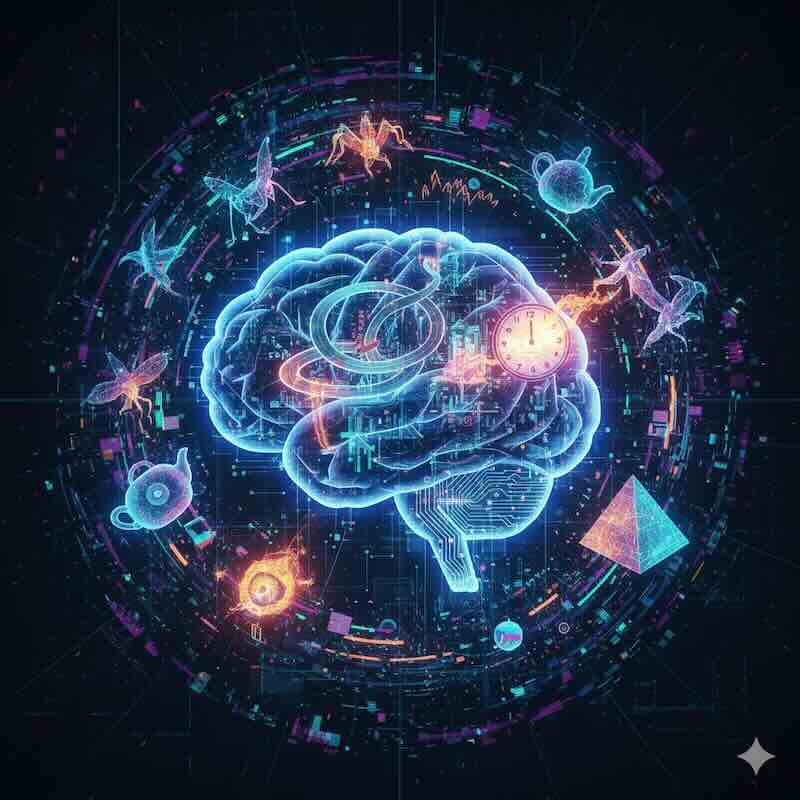
The Confidently Wrong Robot
Here's a fun experiment: ask an AI chatbot about a made-up book, a fictional historical event, or a person who doesn't exist. Maybe ask about "Dr. Robert Pemberton's groundbreaking 1987 study on reverse osmosis in jellyfish neural networks." There was no such study. Dr. Pemberton doesn't exist. Jellyfish don't have neural networks in the way that would make sense. But there's a possibility that an AI assistant will tell you all about it—complete with citations, methodology details, and confident assertions about the findings.
This isn't a bug in the traditional sense. It's a fundamental characteristic of how Large Language Models (LLMs) work. These systems are essentially incredibly sophisticated pattern-matching engines trained on massive amounts of text. They don't "know" things in the way humans do. They predict what words should come next based on statistical patterns. And when they don't have a clear answer, they don't stop and say "I'm not sure about this." Instead, they keep generating text that sounds plausible, authoritative, and utterly convincing—even when it's completely fabricated.
Welcome to Hallucination City
The AI research community has a polite term for this: "hallucinations." I find that terminology a bit too gentle. When an AI invents fake legal cases and a lawyer submits them to court (which has actually happened), or when a chatbot provides medical advice based on non-existent studies, or when students cite fabricated sources in their papers—that's not a hallucination, that's a lie. An unintentional lie, sure, but the damage is the same.
The problem is especially insidious because AI systems deliver false information with the same confident tone they use for accurate information. There's no verbal hemming and hawing, no "I think" or "I'm not entirely sure, but..." It's all presented with the same authoritative voice, making it nearly impossible for users to distinguish between reliable information and creative fiction.
Real Damage in the Real World
Let's talk consequences. In 2023, a lawyer used ChatGPT to research case law and submitted a brief containing six completely fabricated cases. The AI had invented case names, dates, and legal precedents that sounded entirely legitimate. The lawyer didn't verify them, the judge caught it, and the lawyer faced sanctions. That's embarrassing for the lawyer, but more importantly, it reveals a dangerous trust gap.
In healthcare, the stakes get even higher. People are asking AI chatbots for medical advice, and the bots are confidently responding with information that might be outdated, incorrect, or dangerously wrong. A chatbot might recommend a drug interaction that's actually contraindicated, or suggest a dosage that's inappropriate for certain conditions. If someone follows that advice without consulting a real doctor, the results could be catastrophic.
Students are using AI to write papers and generate citations, not realizing that a significant percentage of those references might be completely fabricated. Teachers are catching this now, but how many fake sources have already made it into submitted work? How many undergraduate papers are now sitting in university databases citing research that never existed?
Why Can't AI Just Say "I Don't Know"?
This is the billion-dollar question that AI labs are frantically trying to solve. The technical challenge is enormous. Current LLMs don't have a built-in mechanism for assessing their own confidence. They generate text probabilistically—picking the most likely next word based on patterns—but "most likely" doesn't mean "definitely correct." A model might be 51% confident or 99% confident, but without sophisticated additional systems, it can't really distinguish between those scenarios in a meaningful way.
Some researchers are working on "uncertainty quantification"—teaching models to evaluate their own confidence and express it appropriately. Others are building verification systems that fact-check AI outputs before they reach users. Some companies are implementing citation requirements, forcing models to link claims to specific sources that can be verified. Google's recent AI search features attempt to show source links alongside generated answers, giving users a way to verify information.
The "I Don't Know" Rule
There's a growing movement among AI safety researchers and ethicists pushing for what's essentially an "I don't know" rule. The idea is simple: if an AI system's confidence in its answer falls below a certain threshold, it should explicitly say so. Instead of confidently generating plausible-sounding nonsense, it should respond with something like "I don't have reliable information about that" or "I'm not confident in this answer, so you should verify it independently."
This sounds straightforward, but implementing it is technically challenging. Where do you set the confidence threshold? Too high, and your AI becomes useless, refusing to answer most questions. Too low, and you're back where you started with confident fabrications. Different types of questions require different confidence levels—you want higher certainty for medical advice than for movie recommendations.
Some newer models are getting better at this. They're being trained with explicit instructions to acknowledge uncertainty, to distinguish between facts they're confident about and speculation. But it's an ongoing challenge, and many widely-used AI systems still have a tendency to confidently "BS" their way through questions they can't actually answer.
The Human Factor
Here's the uncomfortable truth: part of the problem is us. We want confident answers. We're using AI assistants specifically because we want quick, definitive information without having to dig through multiple sources ourselves. When an AI says "I'm not sure about that, you should verify this information," it feels less helpful, even though it's actually being more honest and responsible.
There's also a tendency to anthropomorphize these systems. When ChatGPT or Claude responds in conversational, friendly language, our brains trick us into treating it like a knowledgeable human rather than a statistical text generator. We extend trust that isn't warranted. We assume that because it sounds smart and speaks in complete sentences, it must know what it's talking about.
What Can We Do About It?
In the short term, the solution is skepticism and verification. Treat AI-generated information the same way you'd treat information from a random stranger at a bus stop—it might be accurate, but you're going to verify it before making any important decisions. Check citations. Cross-reference facts. Use AI as a starting point for research, not an endpoint.
For developers and companies building these systems, the priority needs to be transparency and uncertainty communication. Users should know when an AI is speculating versus reporting verified facts. Systems should be designed to explicitly flag lower-confidence responses and encourage verification. And there should be clear warnings that these tools can and do generate false information.
Long-term, we need better technical solutions. AI systems that can reliably assess their own knowledge boundaries. Verification layers that catch fabrications before they reach users. Standards and regulations that hold companies accountable for the accuracy of their AI outputs, especially in high-stakes domains like healthcare, legal advice, and education.
Living in an Age of Confident Uncertainty
The paradox of modern AI is that it's simultaneously incredibly impressive and fundamentally unreliable. These systems can write poetry, debug code, explain complex concepts, and hold natural conversations. But they can also confidently tell you that Napoleon invented the helicopter or that eating rocks is good for your digestion. The technology is powerful, but it lacks something essential: the wisdom to know what it doesn't know.
Until we solve the hallucination problem—and it's not clear we fully can with current architectures—we're living in a weird transitional period. We have access to AI assistants that feel authoritative but require constant fact-checking. We're getting tremendous value from these tools, but only if we use them with appropriate skepticism.
The question "Is AI lying to you?" doesn't have a simple answer. It's not lying in the sense of intentional deception. But it is presenting fiction as fact, speculation as certainty, and fabrication as truth. And until these systems learn to say "I don't know" as readily as they generate answers, we need to be the ones asking that question on their behalf.
Trust, but verify. And maybe verify twice. Your AI assistant sounds very confident, but that confidence might be the most convincing hallucination of all.