The Adaptive Home: The Future of Furniture is Fluid
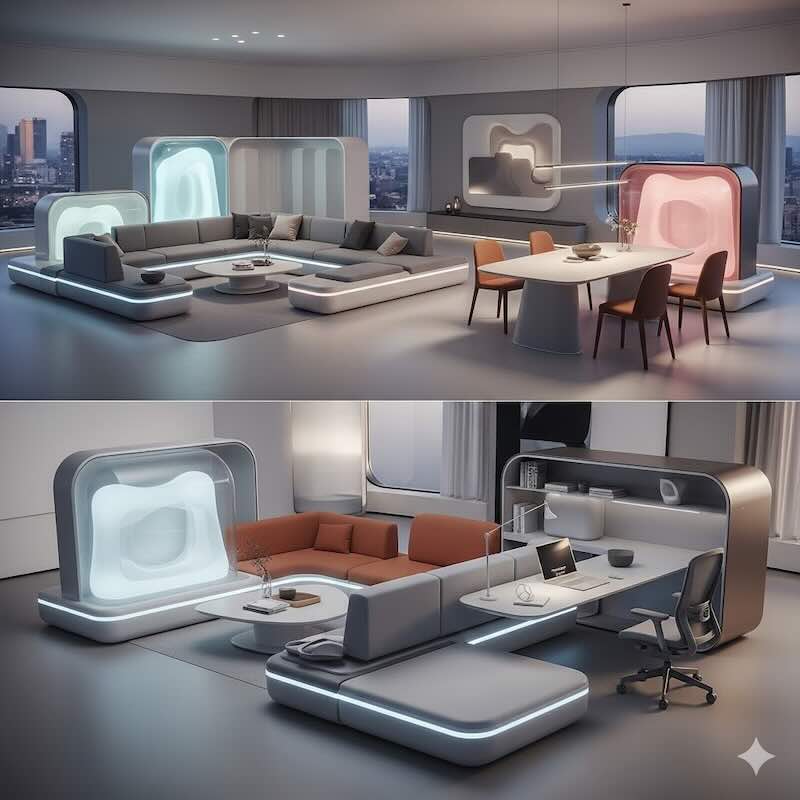
The Transformation from Static Objects to Responsive Systems
Furniture, for centuries, has been defined by its permanence: a solid, static object serving a single purpose. But a revolution is underway, driven by the convergence of IoT, advanced materials science, and a necessity for smarter, smaller living. The furniture of tomorrow will not just contain technology; it will be technology. It will be modular, fluid, and capable of adapting its shape, function, and comfort levels in real-time, effectively blurring the line between interior design and interactive personal computing. This shift is not just about convenience; it's about optimizing our physical health and dramatically reducing our environmental footprint.
Intelligent Furniture: The Ecosystem of Well-Being
The most immediate change is the widespread integration of smart technology. Furniture is becoming a core component of the smart home ecosystem, leveraging embedded sensors and actuators to move beyond simple charging ports and lighting. Think of a bed that monitors your sleep cycle, heart rate, and breathing, automatically adjusting its firmness and temperature to maximize deep rest. Or consider a home office desk that subtly tracks your posture and time spent sitting, prompting you to stand and auto-adjusting its height for optimal ergonomics. This smart furniture connects and communicates, ensuring your environment responds instantly to your needs—lowering lights as you settle into a sofa, or transforming a coffee table into an extended workspace for an impromptu meeting. This personalization and attention to health represent a profound step forward in using our living spaces to promote long-term well-being.
The Materials Revolution: Furniture That Builds Itself
Perhaps the most radical innovation lies in materials science and advanced manufacturing. The concept of 4D Printing is making furniture that assembles itself a reality. Research at places like MIT’s Self-Assembly Lab and the University of Stuttgart is focused on programming materials to transform their shape when exposed to environmental stimuli like heat or moisture. For example, HygroShape wood is shipped flat-packed, but when unwrapped and exposed to normal air, it begins to dry and naturally warp into a pre-programmed, ergonomic chair or stool. Other concepts use magnetic or kinetic energy to allow flat components to 'tumble' together, finding their correct orientation and locking into a final structure. The impact is game-changing: massively reduced shipping costs and volume, zero assembly frustration for the consumer, and resource efficiency in manufacturing.
Designing for a Circular Economy
Alongside digital innovation, sustainability is fundamentally reshaping the industry. Future furniture is leaning into the circular economy through design principles that prioritize disassembly and reuse. This means a greater emphasis on using durable, renewable, or recycled materials—such as reclaimed wood, high-performance recycled plastics, and fast-growing bamboo and rattan. Furthermore, the rise of modular and multifunctional designs—like walls of shelving that transform into beds, or couches that reconfigure into dozens of shapes—directly addresses the reality of shrinking urban spaces. This focus on versatility not only saves space but also reduces overall consumption by making single pieces adaptable for a lifetime of changing needs.
The Clear-Eyed Dangers: Data and the Digital Divide
The transition to the Adaptive Home, while hopeful, presents clear societal risks. The vast amounts of intimate data collected by smart furniture (sleep patterns, weight, posture, daily routine) represent an unprecedented intrusion into personal privacy. Without stringent, transparent regulations on data governance, this information could be exploited for targeted advertising, insurance rate setting, or even security profiling. Additionally, the increasing cost and sophistication of this technology risk creating a stark digital and ergonomic divide. If the furniture that promotes health and longevity is only accessible to the affluent, we risk further cementing health disparities. Our collective challenge is ensuring that the incredible advantages of adaptive, smart furniture are balanced with rigorous data security and are made economically accessible to all segments of society, so that the future of furniture improves life for everyone, not just a privileged few.