Steve Jobs' Last Demo: Would Siri's Stagnation Have Him Rolling in His Grave?
The Day Everything Changed, and Then Didn't
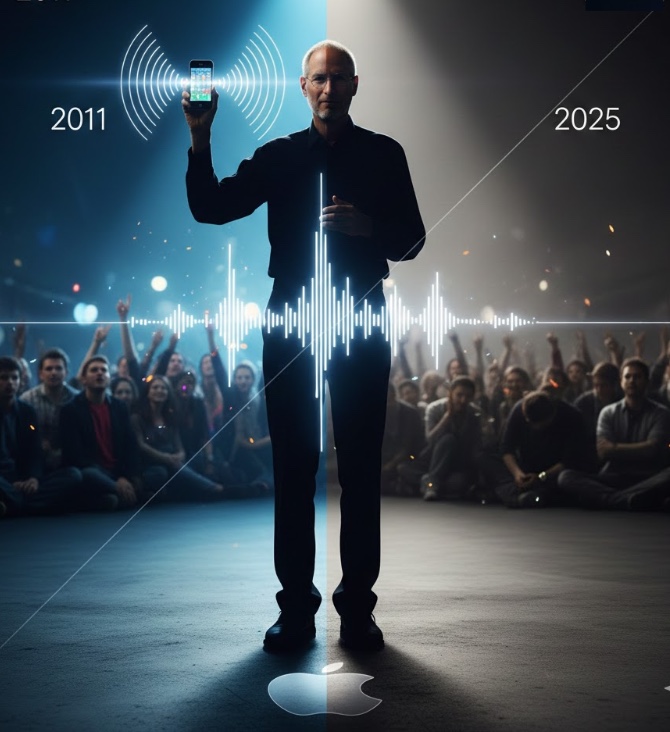
On October 4, 2011, Apple unveiled the iPhone 4S featuring Siri, a voice assistant that seemed revolutionary. The next day, Steve Jobs died at his home in Palo Alto from complications related to pancreatic cancer. The timing was haunting—Jobs had hung on just long enough to see one of his final visions become public.
According to reports, Siri was the last closed-door demo Jobs saw before his death. On his last day, he chaired a board meeting and tried to fool a pre-release version of Siri with questions. When he asked what its gender was, Siri responded, "I have not been assigned a gender." Jobs, ever the perfectionist who obsessed over every detail from product packaging to the screws inside his computers, was satisfied enough with Siri to let it ship. The question that haunts us now: would he still be satisfied 14 years later?
The Vision That Was
To understand what Siri meant to Jobs, you need to look at what he said just a year before his death. In a 2010 email to Apple's top 100 executives, Jobs outlined his strategy to "catch up to Android where we are behind" in areas like speech, and to "leapfrog them" with Siri. This wasn't just about having voice commands—it was about revolutionizing how humans interact with technology.
Jobs had been thinking about this for decades. Apple produced a concept video in 1987 called "Knowledge Navigator" that envisioned an intelligent assistant that could understand natural language, anticipate needs, and seamlessly handle complex tasks. When Apple acquired Siri Inc. for between $100-200 million in 2010, Jobs saw it as the realization of that 23-year-old vision. This was supposed to be transformative—the next revolution after the Mac, iPod, and iPhone.
What Actually Happened
Fast forward to 2025, and Siri has become something Jobs would have likely found unacceptable: a punchline. While Google Assistant and Amazon's Alexa evolved into genuinely useful AI companions, Siri remained frustratingly limited. It still can't set two timers simultaneously. It forgets context from one sentence to the next. It responds to complex questions with "Here's what I found on the web"—essentially admitting it has no idea what you're talking about.
The complaints started almost immediately. Early reviews called Siri "broken and clunky," noting users needed to be quite clinical with phrasing and that it didn't understand the complexities of human language. But that was 2011, and everyone assumed these were just launch issues. The problem is that many of those same issues still exist today. Siri got incrementally better at voice recognition and added some features, but it never achieved the intelligence that Jobs envisioned.
The Man Who Wouldn't Have Accepted This
Steve Jobs was legendarily obsessed with perfection. He delayed products for months to get details right. He fired people for shipping subpar experiences. He famously said "Real artists ship," but he also said the products needed to be "insanely great" before they shipped. Would he have let Siri languish for over a decade with minimal meaningful improvements? Absolutely not.
Jobs understood that technology needed to be both powerful and accessible. The iPhone succeeded because it made a complex device feel natural—you didn't need a manual to figure out how to use it. Siri was supposed to extend that philosophy to voice interaction. Instead, it became a feature that many users gave up on trying to use for anything beyond setting timers and playing music.
The frustration for those who remember Jobs' vision is that the technology to make Siri better has existed for years. ChatGPT launched in late 2022 and showed what conversational AI could do. Google had been improving their assistant continuously. But Apple, the company Jobs built on being first or best at everything, fell so far behind that they're now paying Google $1 billion per year to use Gemini AI to power Siri's backend in 2026—something I've written about in another article.
The Cultural Shift That Lost the Plot
Part of what went wrong might be cultural. After Jobs died, Apple became a different company. Tim Cook is an exceptional operational leader who's grown Apple into the most valuable company in the world. But Cook is not a product visionary the way Jobs was. Jobs would obsessively use early versions of products himself, finding problems and demanding fixes. There are stories of him calling engineers at 3 AM because he noticed something wrong with a beta feature.
That kind of intense, almost unreasonable focus on product quality is hard to maintain, especially at Apple's current scale. But it's exactly what Siri needed. Instead of someone who wouldn't accept mediocrity pushing the team to constantly improve, Siri seems to have become just another feature to maintain rather than a product to perfect.
What Jobs Might Have Done Differently
It's easy to Monday-morning quarterback, but based on Jobs' track record, a few things seem likely. First, he would have killed or completely rebuilt Siri much earlier if it wasn't meeting his standards. Jobs had no problem canceling projects or starting over from scratch if something wasn't working. Apple is only now doing that complete rebuild for a 2026 release—that's 15 years of iterating on a fundamentally flawed architecture.
Second, Jobs would have recognized the AI revolution earlier and made it a top priority. When the iPhone was in development, Jobs brought in the best talent, gave them resources, and personally oversaw every detail. If he'd seen what ChatGPT could do in 2022, you can bet Apple would have immediately shifted massive resources to AI development rather than continuing to tinker around the edges.
Third—and this is speculation—Jobs might have been willing to partner or acquire his way to a solution faster. He did it with Siri itself, buying the technology rather than building from scratch. If that meant acquiring an AI startup or partnering with leaders in the field, he likely would have done it, but on Apple's terms and with Apple's standards.
The Bigger Question of Legacy
Here's what makes this story particularly poignant: Siri was supposed to be part of Jobs' lasting legacy. The iPhone 4S with Siri was the last product he personally signed off on. It was his final act of revolutionizing how humans interact with technology. And while the iPhone itself remains iconic, Siri has become something closer to a cautionary tale about how even great companies can lose their way.
Jobs famously said his final words were "Oh wow. Oh wow. Oh wow." His sister Mona described how he looked at his family and then "over their shoulders past them" before saying those words. Whatever he saw in those final moments, it wasn't Siri circa 2025, struggling to do basic tasks that competitors mastered years ago.
Would He Actually Be Rolling in His Grave?
The phrase "rolling in his grave" might be overused, but in this case, it feels appropriate. Jobs spent his entire career pursuing excellence, refusing to ship anything he didn't believe was the best it could be. Siri in its current form violates everything he stood for. It's a half-implemented vision, a product that should have been revolutionary but instead became a symbol of Apple falling behind in AI.
The good news—if we want to find some—is that Apple is finally doing something about it. The 2026 overhaul suggests that someone at Apple finally realized that Siri's mediocrity was unacceptable. They're starting over with modern AI architecture, partnering with Google temporarily, and planning to eventually build their own competitive AI engine. It's late, arguably far too late, but it's something.
But even that solution feels un-Jobs-like. Paying your biggest competitor to power your signature feature? Admitting publicly through your actions that you fell so far behind you need help catching up? Jobs would have done almost anything to avoid that position. He would have seen the AI revolution coming and made sure Apple led it rather than scrambled to catch up.
The Lesson for All of Us
The story of Siri isn't just about one product failing to live up to its promise. It's about how even the greatest companies can lose sight of what made them great. Apple succeeded under Jobs because he was maniacally focused on creating products that were not just good, but transformative. He pushed his teams beyond what they thought possible, and he refused to accept "good enough."
When that driving force disappears, it's easy for companies to become complacent. Revenue and stock price become the metrics that matter, and product excellence becomes secondary. Apple is still making great hardware and solid software, but they've lost the edge in AI that Jobs surely would have insisted on maintaining.
So yes, if Steve Jobs could see Siri today—struggling with basic requests, trailing competitors by years, requiring a billion-dollar Google partnership to become relevant—he would probably be more than just rolling in his grave. He'd be furious that his final product vision was allowed to stagnate for over a decade while the competition passed Apple by.
The real question is whether the upcoming Siri overhaul will finally deliver on Jobs' original vision, or whether it's too little, too late. We'll find out in spring 2026. But one thing is certain: Steve Jobs wouldn't have waited 15 years to fix it. He would have demanded excellence from day one, and he would have gotten it—or heads would have rolled until he did.
Maybe that's the biggest lesson here. Sometimes, rolling in your grave is the right response to mediocrity masquerading as innovation. Rest in peace, Steve. Your voice assistant should have been insanely great. We're still waiting for it to get there.