Is Siri Going to Finally 'Smarten Up'? The 2026 Overhaul You've Been Waiting For
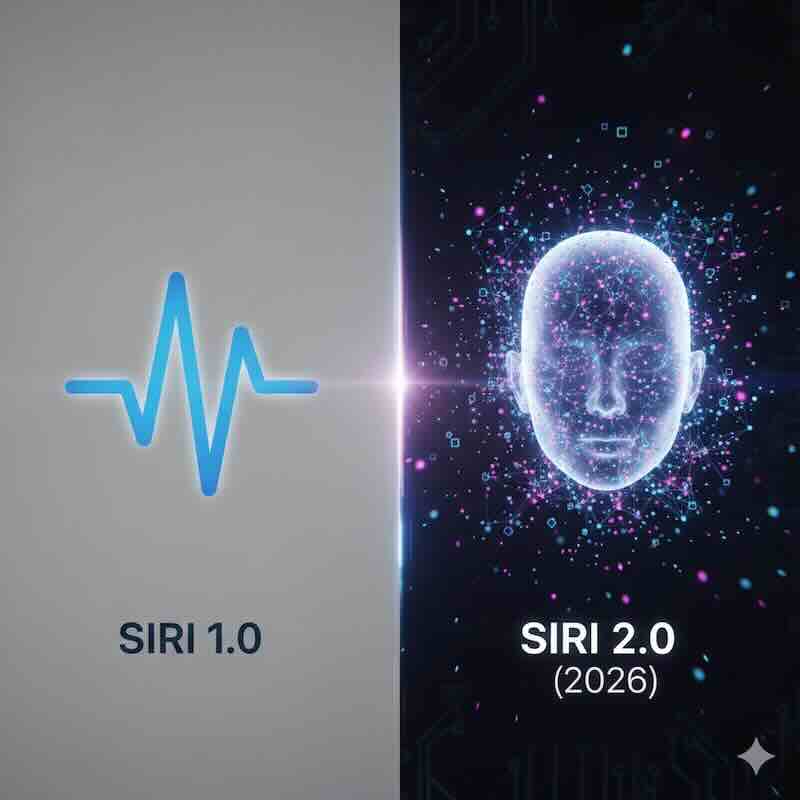
After 14 Years, Siri's Getting a Brain Transplant
Let's be honest: Siri has been a punchline for years. While Google Assistant and Amazon's Alexa evolved into genuinely useful AI companions, Siri remained stuck in 2011, confidently misunderstanding your requests and offering to search the web for things it should already know. Ask it to set two timers? "Sorry, I can only set one timer at a time." Want it to remember context from three sentences ago? Good luck. For a company that prides itself on seamless user experience, Siri has been an embarrassing weak spot.
But that's about to change—maybe. Apple CEO Tim Cook has confirmed that a completely revamped Siri is on track for a 2026 release, and the details that have leaked out suggest this won't be a minor update. We're talking about a fundamental reimagining of what Siri can do, powered by some serious AI muscle that Apple is, somewhat awkwardly, borrowing from its biggest competitor.
The Google Elephant in the Room
Here's where it gets really interesting. Apple will pay Google approximately $1 billion per year for a 1.2 trillion parameter artificial intelligence model to power the new Siri. Let that sink in for a second. Apple—the company that built its brand on vertical integration and controlling every aspect of the user experience—is essentially renting Google's brain to make Siri work.
The numbers tell the story of how far behind Apple has fallen. Apple's current cloud-based Apple Intelligence uses 150 billion parameters, while the custom Gemini model Apple is getting has 1.2 trillion parameters—that's eight times more powerful. In AI terms, that's not an upgrade, it's a quantum leap. This massive model will handle what Apple calls Siri's "summarizer and planner functions"—the components that help the voice assistant synthesize information and decide how to execute complex tasks.
The really clever (or desperate, depending on your perspective) part is that Apple is unlikely to promote this partnership, and Gemini models will just power parts of Siri secretly behind the scenes. Users won't see any Google branding. All of the new Siri will be marketed as Apple's technology running on Apple servers. It's like if Ferrari started putting Honda engines in their cars but kept the Ferrari badges and hoped nobody noticed.
What This Means for Your Daily Experience
So what will this supercharged Siri actually do differently? Based on the leaks and Apple's own promises, we're looking at some genuinely transformative capabilities. The new Siri will reportedly be able to understand what the user is doing on their device, including what's on the screen and which apps are open. This is huge. Imagine saying "add this to my shopping list" while looking at a recipe, or "send this to Mom" while viewing a photo, and Siri actually understanding the context without you having to explain everything.
The vision Apple painted back at their 2024 developer conference showed Siri juggling multiple apps to help plan a lunch after a flight—checking your calendar, reading relevant emails, finding restaurant options, and making reservations, all in one fluid conversation. That kind of multi-app, multi-step task execution has been beyond Siri's capabilities, but with the Gemini-powered backend, it might actually become reality.
There's also talk of serious improvements in personal context awareness. Siri will supposedly be able to pull information from your photos, messages, documents, and other data to answer questions like "what was the name of that restaurant my brother recommended last month?" or "find the photo I took at the beach last summer with the red umbrella." Right now, Siri can barely remember what you asked it 30 seconds ago, so this would be a game-changer.
The Waiting Game and the Broken Promises
Here's the frustrating part: we were supposed to have some of this already. Apple originally expected features that would supercharge Siri with the ability to take action inside other apps to be released in spring 2025, but the company announced in March 2025 that these features were being delayed until 2026. The company admitted that "it's going to take us longer than we thought to deliver on these features".
The delays have real consequences. Some users filed class-action lawsuits claiming Apple misled them about AI capabilities when they bought their iPhone 16s. Developers who were promised these features for their apps have been left in limbo. And perhaps most importantly, every month of delay is another month where Google Assistant and Alexa continue to widen the gap.
The technical challenges have been significant. Apple's software chief Craig Federighi explained that limitations of the original Siri architecture weren't getting them to the quality level customers needed, forcing the company to switch to a deeper end-to-end architecture. In other words, they tried to patch the old Siri and realized they needed to essentially rebuild it from scratch. That's why we're looking at spring 2026 for the full rollout, likely arriving with iOS 26.4.
Apple's Dirty Little Secret: This is Temporary
Now here's the plot twist that makes this whole story even more fascinating: Apple doesn't want to use Google's AI long-term. Despite the company bleeding AI talent—including the head of its models team—management intends to keep developing new AI technology and hopes to eventually replace Gemini with an in-house solution. Apple's models team is working on a 1 trillion parameter cloud-based model that it hopes to have ready for consumer applications as early as next year.
This is classic Apple strategy. Remember when they used Intel chips while secretly developing their own M-series processors? Or when they relied on Google Maps while building Apple Maps? Apple has a pattern of using third-party solutions as a stopgap while they develop their own alternative. The difference this time is that the gap they're trying to close is enormous, and Google isn't standing still—they're constantly improving Gemini while Apple plays catch-up.
The challenge is compounded by a talent problem. Reports indicate Apple has lost 12-15 key AI researchers to competitors like Meta, OpenAI, and Anthropic in the past year. When your head of AI models leaves for a compensation package worth hundreds of millions at Meta, it's a sign that the Silicon Valley AI war is getting brutal. Can Apple build a model competitive with Gemini by late 2026? Maybe. Will it stay competitive as Google continues to advance? That's the bigger question.
The Privacy Promise
One thing Apple is being very careful about is privacy. The AI model that Google is developing for Apple will run on Apple's Private Cloud Compute servers, so Google will not have access to Apple data. This is actually a pretty elegant solution—Apple gets the benefits of Google's superior AI model without handing over user data to Google's servers.
This privacy-first approach is both Apple's greatest strength and its biggest handicap in the AI race. While competitors have been hoovering up user data to train their models, Apple's commitment to on-device processing and data minimization has slowed their AI development. It's the right ethical stance, but it comes with real technical costs. The question is whether users will accept a less capable assistant in exchange for better privacy, or whether they'll just switch to Google Assistant and accept the privacy trade-offs for better functionality.
The China Problem
There's one market where this whole Google-powered Siri plan falls apart: China. Apple plans to use its own AI models for the Chinese version of Siri, with a special filter developed by Alibaba Group that will adjust content according to Chinese government requirements. Google services have been banned in China for years, so Apple has no choice but to use different technology there.
This creates an interesting situation where Chinese Siri will potentially be less capable than Siri in the rest of the world, at least initially. Apple is also in talks with Baidu to potentially provide additional AI capabilities for the Chinese market. It's yet another reminder that the global tech landscape is increasingly fragmented, with different AI solutions required for different regulatory environments.
Will It Actually Be Better?
Here's the uncomfortable truth: nobody really knows if the new Siri will work as promised. Bloomberg's Mark Gurman included a significant warning, noting that "there's no guarantee users will embrace it, that it will work seamlessly or that it can undo years of damage to the Siri brand". That's a pretty damning assessment, and it's probably realistic.
Siri has been bad for so long that many users have simply stopped trying to use it for anything beyond basic tasks. Changing that perception will require the new Siri to not just be good, but to be dramatically, obviously better in ways that make people want to give it another chance. One or two impressive demos won't cut it—Apple needs sustained, reliable performance across thousands of different use cases.
There are also questions about execution. AI models are notoriously unpredictable, prone to hallucinations and unexpected failures. How will Apple handle situations where Gemini generates incorrect information or misunderstands context? What happens when the system fails in embarrassing ways, as all AI systems eventually do? Apple's reputation for polish and reliability is on the line here.
The Bigger Picture
This whole saga tells us something important about where we are in the AI revolution. Even Apple—one of the most valuable companies in the world, with virtually unlimited resources—can't keep up with the pace of AI development on its own. The fact that they're willing to pay a billion dollars a year for Google's help is a stunning admission of how far behind they've fallen.
It also highlights how quickly the AI landscape is consolidating around a few major players. Google, OpenAI, and Anthropic are building foundational models that other companies are licensing and building on top of. Even Apple, with all its advantages, has decided it's faster to rent than to build. That has implications for competition, innovation, and the future structure of the tech industry.
For users, the message is: wait and see. Spring 2026 is still months away, and even when the new Siri launches, it'll probably take time to work out the bugs and expand capabilities. The vision of a truly intelligent, context-aware, helpful voice assistant is compelling. But whether Apple can deliver on that vision—even with Google's help—remains to be seen.
One thing's for sure: the new Siri better be good. Because if Apple can't fix their voice assistant even with a billion-dollar Google AI model powering it, then maybe the problem isn't just the technology—maybe it's the whole approach. And at that point, even Tim Cook's optimistic timelines won't be enough to save Siri's reputation.