The Post-Platform Era: Where Social Media is Headed
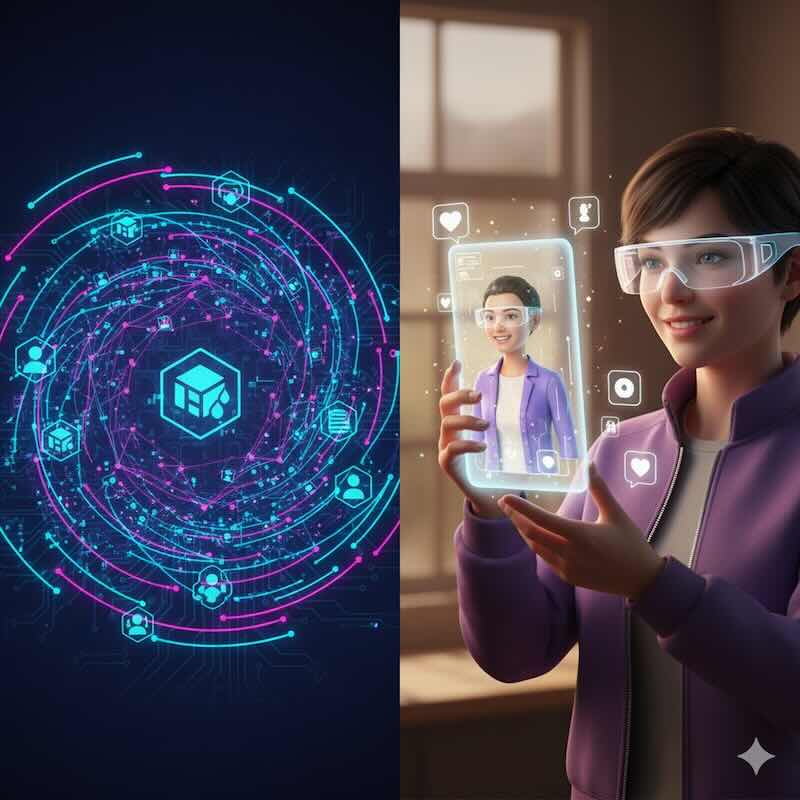
Decentralization, Ownership, and the Rise of Immersive Commerce
The social media landscape is undergoing a revolutionary transformation, shifting away from the monolithic, centralized platforms we've known for the past two decades. The future is not about one giant network connecting everyone; it's about a decentralized, specialized, and immersive ecosystem. This new direction is driven by fundamental technological shifts, primarily the growth of blockchain-powered decentralized social networks (DSNs) and the pervasive integration of Augmented Reality (AR) and AI-driven social commerce into our daily feeds. This evolution promises to give users unprecedented control, shifting power from the corporation back to the individual and the community. The result will be a more vibrant, authentic, and personalized online experience.
At the core of this change is the move toward decentralization. Traditional social media giants maintain centralized control over all data, content moderation, and algorithmic feeds, often leading to issues with censorship, data privacy breaches, and opaque decision-making. DSNs, like those built on the open-source AT Protocol or federated networks like Mastodon and Bluesky, flip this model. By distributing user data across multiple independent servers, or "instances," and often using blockchain technology, they eliminate the single point of control. This technology is designed to make content and user profiles censorship-resistant and gives users true ownership of their data. For the first time, people will be able to migrate their social graph—their connections, posts, and history—from one platform to another, forcing networks to compete on quality and user experience rather than trapping users with proprietary data walls. This is a profound structural shift that promises to inject democracy and transparency back into our digital lives.
The Integration of AR, AI, and Social Commerce
Complementing this structural change is the growing demand for immersive experiences and social commerce. Augmented Reality (AR) is moving beyond simple filters to become a crucial utility. Soon, we won't just see a picture of a product on social media; we'll use an in-app AR feature to virtually "try on" makeup, place a piece of furniture in our living room, or see a digital overlay of a new car in our driveway. This seamless integration of discovery, interaction, and purchasing is driving the boom in social commerce, making the act of shopping an inherently social and instantaneous experience. Furthermore, AI is becoming the essential, quiet partner in this evolution. It is being used not just to personalize content feeds—making short-form video dominant—but also to provide advanced automation for customer service, content generation, and sophisticated fraud detection, allowing users and creators to focus on authentic connection rather than platform maintenance.
Clear-Eyed Dangers of Autonomy and Hyper-Consumerism
The optimistic view sees this new environment as a renaissance for online communication: a more democratic, interest-driven, and engaging space. However, we must be clear-eyed about the potential pitfalls inherent in this technological shift. The lack of a central authority in DSNs, while promoting freedom of speech, presents a serious challenge to content moderation. The early struggles of decentralized platforms to manage the rapid spread of misinformation, hate speech, and harmful content demonstrate that community-driven governance requires robust, non-technical, and transparent solutions to prevent the networks from becoming havens for toxic content. A balance must be struck: how do we guarantee user autonomy without sacrificing a safe, civil, and truthful digital society?
Furthermore, the rise of hyper-personalized AR-driven social commerce means that the line between content and advertising will become virtually invisible, accelerating consumerism. While convenient, this deep integration requires new forms of digital literacy and ethical guardrails to protect consumers from manipulative practices. The future of social media is bright, promising incredible freedom and innovation, but its positive impact hinges entirely on whether we, as a global community, can design and enforce the moral and societal mechanisms to handle this new level of autonomy. It will require a constant, conscious effort to ensure that technology empowers individuals and communities without enabling the spread of toxicity or unchecked exploitation.
The Path Forward
Ultimately, the era of the single-platform monopoly is fading. The next chapter of social media will be defined by resilience, ownership, and choice. The technology is giving us the tools to build the internet we always wanted—one that serves us, not the other way around. But the success of this vision depends on our collective maturity to govern these new digital public squares responsibly.