Weight Loss Tech: GLP-1 Drugs, Smart Scales, and the Quantified Body
The Pharmaceutical Revolution Nobody Saw Coming
Let's start with the elephant in the room—or rather, the dramatically shrinking elephant. GLP-1 receptor agonists like Ozempic, Wegovy, and Mounjaro have fundamentally changed the conversation around weight loss. These aren't your sketchy diet pills from late-night infomercials. These are medications that actually work, helping people lose 15-20% of their body weight by mimicking hormones that regulate appetite and blood sugar. Hollywood's quietly buzzing about them. Your doctor might be prescribing them. And the pharmaceutical companies making them are watching their stock prices soar into the stratosphere.
The science is legitimately impressive. These drugs basically hack your brain's satiety signals, making you feel full faster and stay full longer. For people who've struggled with weight their entire lives, who've tried every diet from keto to carnivore to intermittent fasting, these medications can feel like a miracle. And in many ways, they are. But—and you knew there was a but coming—we're only beginning to understand the long-term implications of pharmaceutically suppressing appetite at scale.
Your Body as a Data Dashboard
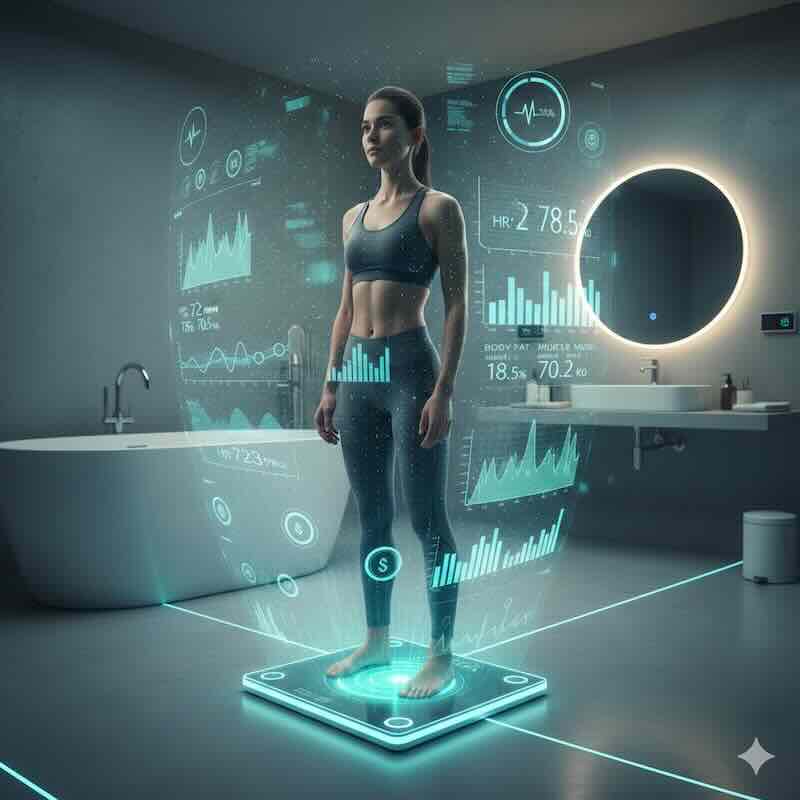
While drugs are getting the headlines, there's been a quieter revolution in tracking technology. Smart scales now measure body fat percentage, muscle mass, bone density, hydration levels, and even your cardiovascular health—all from a 30-second morning weigh-in. Continuous glucose monitors (CGMs), once reserved for diabetics, are being adopted by biohackers and health enthusiasts who want real-time feedback on how different foods affect their blood sugar.
Wearables like Apple Watch, Whoop, and Oura Ring track your sleep quality, heart rate variability, calories burned, and activity levels with increasing accuracy. AI-powered apps can analyze photos of your meals and estimate caloric content, macros, and even predict how that food will affect your energy levels based on your historical data. We're approaching a future where your body isn't just something you inhabit—it's a system you monitor, optimize, and debug like a piece of software.
The AI Personal Trainer in Your Pocket
Fitness apps have evolved way beyond simple calorie counters. Modern AI coaches can create personalized workout plans that adapt based on your progress, injury history, and even your mood. Apps like Future pair you with real human trainers who use your wearable data to adjust your programming in near real-time. Others use computer vision to watch your form during exercises and provide instant feedback on your squat depth or push-up technique.
Some systems are getting really sophisticated—analyzing your sleep data to determine whether you should do high-intensity training or take a recovery day, adjusting your nutrition targets based on menstrual cycle tracking, or using machine learning to identify patterns in when you're most likely to skip workouts so they can send timely motivation. It's like having a personal trainer, nutritionist, and accountability partner who never sleeps and knows you better than you know yourself.
The Dark Side of Optimization
Here's where my enthusiasm hits a speed bump. All this tracking and optimization can create an unhealthy obsession with metrics. When you're constantly monitoring body fat percentage, step counts, sleep scores, and glucose levels, it's easy to develop what some psychologists are calling "orthorexia"—an unhealthy fixation on healthy eating and body optimization. The line between health-conscious and health-anxious can get blurry fast.
There's also the issue of data accuracy. These devices aren't medical-grade instruments. Your smart scale's body fat reading can swing by several percentage points depending on your hydration level. Your fitness tracker might overestimate calories burned, leading you to "eat back" calories you didn't actually expend. When people make decisions based on imperfect data treated as gospel truth, problems emerge.
And let's talk about the GLP-1 drugs for a second. Yes, they work. But they also come with side effects—nausea, vomiting, potential gallbladder issues, and the uncomfortable reality that most people regain weight if they stop taking them. We're potentially creating a society dependent on weekly injections to maintain a healthy weight. Is that liberation from obesity, or just a different kind of trap?
The Accessibility Problem
Here's the uncomfortable truth: most of this technology is expensive. GLP-1 drugs can cost $1,000+ per month without insurance. High-end smart scales run $150-300. Premium fitness app subscriptions with AI coaching cost $40-200 monthly. Continuous glucose monitors aren't covered by insurance unless you're diabetic. We're creating a two-tier system where wealthy people have access to incredibly effective weight loss tools, while everyone else is still counting calories on free apps and hoping for the best.
This isn't just about fairness—it's about public health. If we develop amazing technologies that only the affluent can access, we're not solving the obesity crisis, we're just moving it further down the socioeconomic ladder. The people who most need help with weight-related health issues are often the least able to afford these cutting-edge solutions.
Environmental Footnote
Quick reality check: all this tech has an environmental cost. Smart devices require rare earth minerals, manufacturing energy, and create e-waste when they're replaced every few years. GLP-1 drugs require complex pharmaceutical manufacturing and cold-chain distribution. The servers running AI fitness apps consume electricity 24/7. None of this is free from an environmental perspective, and we should acknowledge that as we enthusiastically adopt these technologies.
The Path Forward
So where does this leave us? I think weight loss technology is genuinely improving lives. For people struggling with obesity-related health conditions, GLP-1 drugs can be life-saving. For folks who respond well to data and gamification, tracking apps can provide the structure and motivation they need. The technology itself isn't the problem—it's how we implement it, who has access to it, and whether we're creating healthy relationships with our bodies or just new forms of obsession.
The best future might be one where we use these tools mindfully—treating them as supports rather than solutions, as feedback mechanisms rather than report cards. Where we work to make effective interventions accessible across income levels. Where we remember that health is multidimensional and can't be reduced to a number on a scale or a score on an app.
Technology can be a powerful ally in weight loss, but it can't replace the harder work of building sustainable habits, addressing emotional eating, fixing our food environment, or creating social structures that support healthy living. The scale might be smart, but wisdom still requires a human touch.